
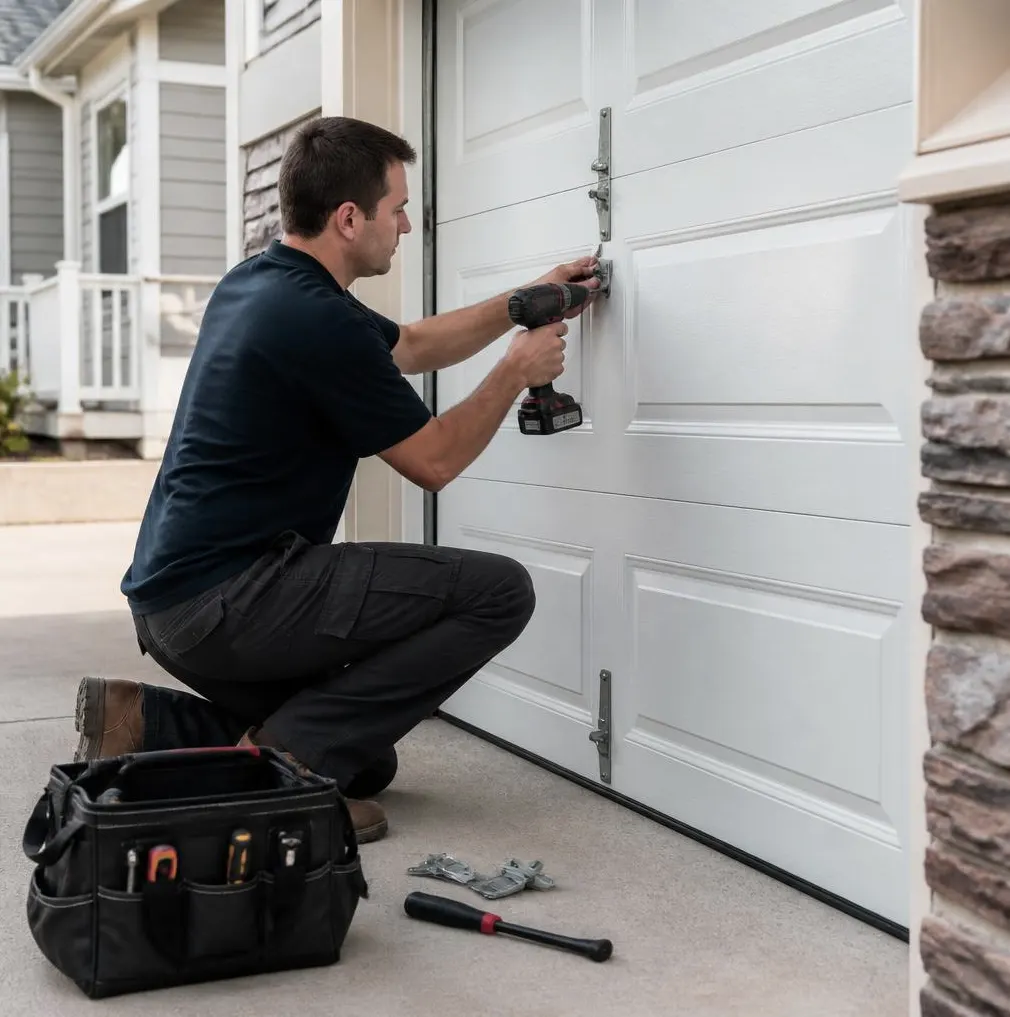
What a Technician Sees on a Typical Track Call
The call usually starts the same way: "My garage door is stuck" or "it's making a grinding noise and won't close all the way." On arrival, the door is often sitting crooked in the opening, hung up a few inches from the floor, or jerking hard at one specific spot every time it moves. Sometimes a roller has popped completely out of the track and is hanging loose. In this part of New York, these calls spike after the first hard freeze, after a plow or snowblower gets too close to the garage, and anytime a car backs into the door edge on an icy driveway.
Symptoms That Point to a Track Problem
- Binding or jerking at the same point in the door's travel, rather than smooth movement top to bottom.
- A visible gap between the rollers and the track wall, or rollers that look like they're riding on the edge instead of inside the channel.
- A crooked door — one side appears higher than the other when fully closed or open.
- Grinding or scraping noises concentrated in one section of track rather than along the whole run.
- The opener reverses the door partway through its cycle because the safety sensors read resistance as an obstruction.
- Rollers popping out of the track, sometimes repeatedly in the same spot.
None of these symptoms should be pushed through with extra force. A door fighting a bent track puts strain on the opener, the cables, and the spring system, and can turn a simple alignment fix into a multi-part repair.
Causes, in the Order a Technician Checks Them
1. Physical Impact Damage
The first thing a technician looks for is a dent, crease, or flattened spot in the track itself. This is almost always physical — a car bumper, a snowblower chute, a ladder, or even a hard gust during a nor'easter pushing something into the door. A dented track creates a pinch point that rollers can't pass through smoothly, and that's usually where the binding and noise are happening.
2. Loose or Shifted Mounting Brackets
Next is the hardware holding the track to the wall and header. Garage door tracks are fastened to wood framing, and humid summers followed by dry, cold winters cause that wood to expand and contract. Over years, lag screws and brackets can work loose, letting the track shift slightly out of its original position. This is common in the area's older housing stock, where original doors and original mounting hardware have been in place for decades.
3. Door Thrown Out of Alignment by a Broken Spring
If a spring has failed or is unevenly tensioned, the door can drop unevenly or slam shut hard, especially on an icy morning when everything is already stiffer than usual. That uneven movement puts lateral stress on the tracks and can bend them even if nothing hit them directly. A technician checks spring balance here because fixing the track without addressing the spring just invites the same damage again.
4. Worn or Damaged Rollers
Old nylon or steel rollers wear down and develop flat spots or loose stems over time. A worn roller rides poorly inside even a perfectly straight track, mimicking the symptoms of a bent one. This gets checked alongside the track itself since replacing one without the other often doesn't solve the problem.
5. Foundation and Apron Movement
Finally, especially in homes that have seen several freeze-thaw cycles, a technician checks whether the concrete apron or slab has heaved or settled slightly. If the floor isn't level anymore, the vertical tracks on either side of the door may no longer be plumb to each other, causing a chronic alignment problem that no amount of bracket-tightening will fully fix.
What the Fix Actually Involves
Minor bends can sometimes be corrected on-site with the right tools, pulling the track back into alignment and re-securing it to solid framing. More significant dents or creases usually call for replacing that section of track rather than trying to hammer it straight, since a repaired bend is a weak point that tends to fail again under stress. Loose brackets get re-anchored, sometimes into fresh framing if the original wood has worn out. Worn rollers get swapped for new ones, and this is a good moment to upgrade to nylon rollers for quieter, longer-lasting operation. If the issue traces back to a spring, that gets addressed as part of the same visit so the new alignment doesn't get undone within a few weeks.
When to Call Spencerport Garage Door
If a door is binding, running crooked, or a roller has come loose from the track, it's time to call rather than keep operating it. Our Garage Door Repair service covers diagnosing and correcting track alignment issues, and when rollers or cables are worn out alongside a bent track, our Cable & Roller Replacement service handles both at once so the repair holds up through the winter ahead. We serve Spencerport, Brockport, Gates, Ogden, Churchville, Chili, Hilton, and Greece.
If your garage door is grinding, sticking, or sitting crooked, call Spencerport Garage Door today and we'll get it back on track before winter weather makes it worse.